



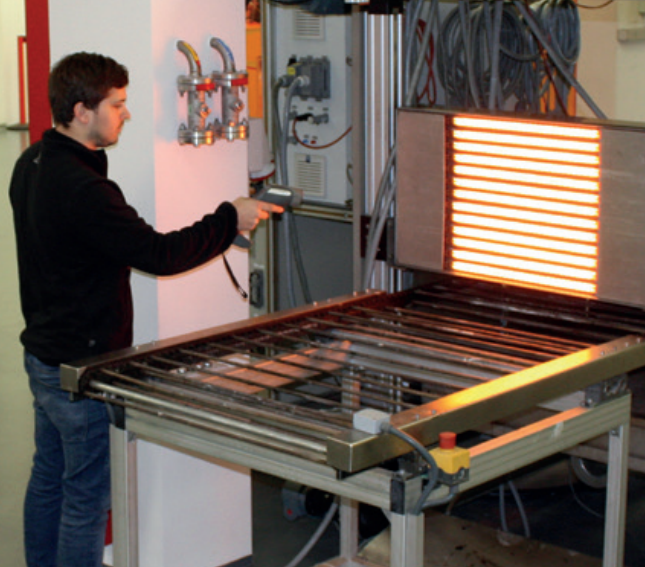
Why we obsess over testing our heating tubes
Look, nobody wants to be the person who has to tell the boss that the entire production line is down because one single heating lamp decided to short out. It’s a nightmare. One tiny insulation failure and suddenly your equipment is fried, and you’re staring at a lot of expensive downtime. That’s why we don’t do “batch sampling.” We don’t just test a few tubes and hope for the best. Every single tube we ship goes through a full Hi-Pot (withstand voltage) and insulation resistance check. Every single one.
The reality of heat and stress
Industrial infrared lamps live a hard life. They’re constantly heating up and cooling down, which means the quartz and the electrodes are always expanding and contracting. Over time, that stress can cause microscopic cracks. It can wear down the insulation between the energized element and your machine’s grounded chassis. To catch this, we hit the tubes with a high-voltage stress test. We’re basically checking if the materials can handle more than they’ll ever see in normal operation. If there’s a pinhole leak or a messy seal, the current jumps. The tube fails. We scrap it right then and there, so it never even makes it to your loading dock.
Two different ways we check for trouble
We look at two different things here. First, we check insulation resistance. We’re looking for “leakage.” A high Megaohm reading is what we want—it tells us the electricity is staying exactly where it belongs: inside the filament. Then there’s the dielectric withstand test. This is different. This is where we push the component to its absolute limit. We want to make sure it won’t arc over when you hit it with those sudden voltage spikes that happen during power-on. It’s the best way to stop those annoying “burn outs.”
The honest trade-offs
Now, here’s the thing: you can’t just crank the voltage to infinity. If we ramp up the power too fast, we could actually stress the quartz. It’s a balancing act. We’ve spent a lot of time calibrating our rigs to be tough enough to find the “lemons,” but gentle enough to keep the tubes structurally sound. One last tip from the field: if you’re running these in a damp environment, keep an eye on your housings. Even a perfectly tested tube can arc if you let conductive dust or grime build up on the terminals. Keep them clean, and they’ll treat you right.