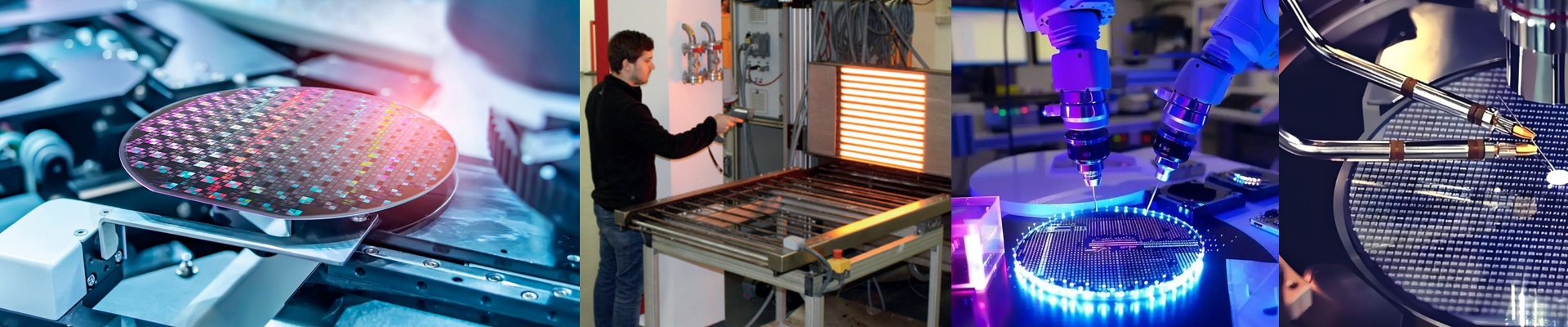
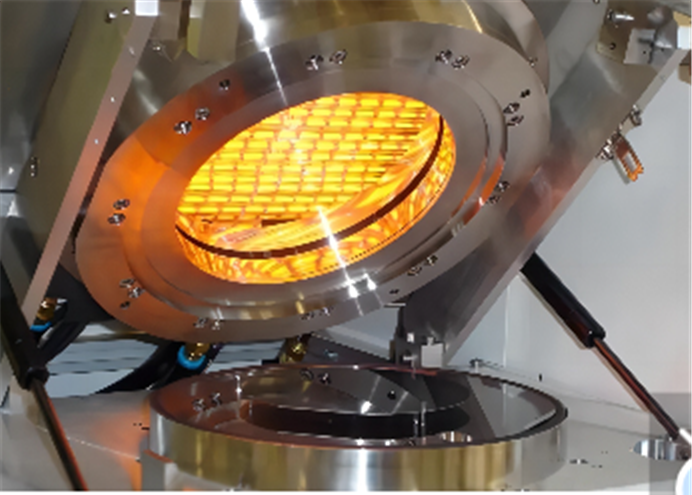
On the lithography floor, you know how it is. A soft bake that drifts even half a degree can throw your linewidths off. A hard bake that runs too hot will bake the resist so hard it fights the developer, and you get undercut you didn’t ask for. And those infrared lamps? They’re not just heaters. They’re process tools, pure and simple. What actually matters under the hood We build the lamp around short-wave infrared, tuned so the resist absorbs the heat volumetrically and fast. That gives you a quick ramp, minimal thermal lag, and wafer-level uniformity within ±0.1°C across the bake surface. The emitter sits on a stabilized supply to keep output repeatable, and the assembly is rated for Class 1–100 cleanrooms with zero particle generation. You can plan on 5,000+ hours of life with under 5% output drop, and run 24/7 without unplanned downtime. Why this matters on the line Soft bake sets adhesion and pulls solvents out. Hard bake sets the etch mask integrity. With this lamp, you lock in the thermal budget for each batch. The same temperature profile repeats wafer to wafer, lot to lot, so CD control and yield stop being guesswork. Energy use drops because the lamp heats the target, not the frame around it. Fewer lamp swaps mean fewer process holds and less scrap. What to watch for Match the lamp to the chamber geometry and the quartz window transmission curve. If you don’t, reflectance and hot spots will wreck uniformity. Verify connector type, voltage, and the cooling path against your equipment. Plan for periodic recalibration of the pyrometer and emitter output. The lamp will do its job, but only when the rest of the system is aligned.