Cleaning Up the Fab: Why IR Heating Actually Works
Let’s be honest about semiconductor fab. We’re obsessed with thermal budgets because one tiny slip and you’ve got a pile of expensive scrap. For a long time, we just leaned on old-school resistive heaters. They work, sure, but they’re clumsy. Switching over to infrared (IR) lamps is a much smarter way to get your factory “green” without sacrificing performance. It’s not just about checking a corporate sustainability box; it’s about stopping the bleed of wasted power.
Stop heating the air
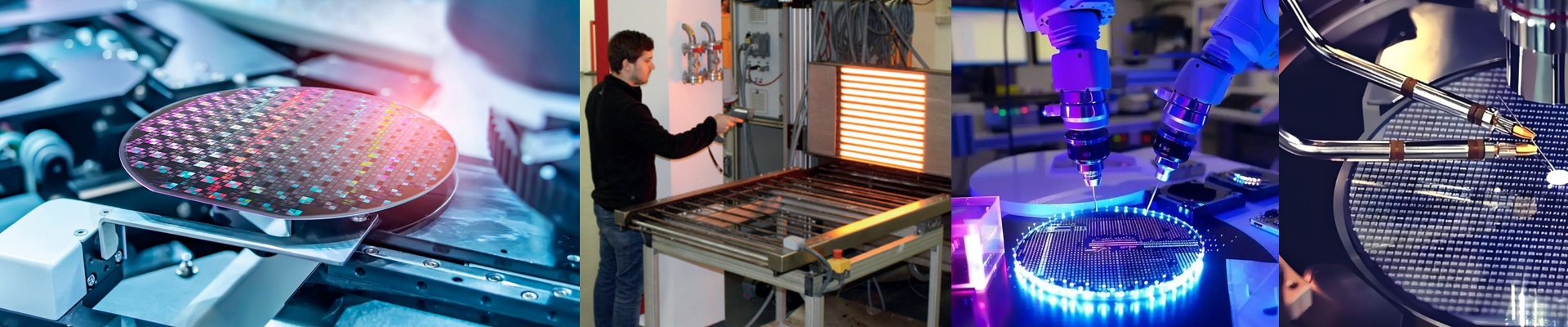
Here is the thing about traditional heaters: they’re inefficient. They try to heat everything—the vacuum chamber, the metal chassis, the inert gas—just to get the wafer to the right temperature. It’s like trying to warm up a single slice of pizza by heating your entire kitchen. IR lamps are different. They use radiation to hit the wafer surface directly. You aren’t wasting energy on the surrounding hardware. When you stop heating the “room” and start heating the part, your power draw per wafer drops significantly.
Snappy response times
The real magic is in the speed. Resistive ovens are slow to react. IR lamps? You can flick them on and off in milliseconds. This means you don’t get that annoying “over-shoot” where the temperature spikes past your target, wasting energy and risking your yield. Pair these lamps with a decent temperature sensor, and you’ve got a tight loop. It feels stable. You get a smooth thermal profile across the wafer without that lingering heat soak that keeps your energy bills high.
The catch (and how to fix it)
Now, it’s not all sunshine. IR lamps pack a massive amount of heat into a very small space. If your cooling manifolds aren’t up to the task, you’re going to have a problem. You’ll see your baseline temperature start to drift because your heat exchangers can’t keep up with that localized flux. **Do yourself a favor: audit your chilled water flow before you rip out those resistive elements.**You don’t want to find out your cooling is insufficient halfway through a run. At the end of the day, making a fab more sustainable isn’t about finding one magical part. It’s just about cutting the waste. IR heating does exactly that—one kilowatt-hour at a time.