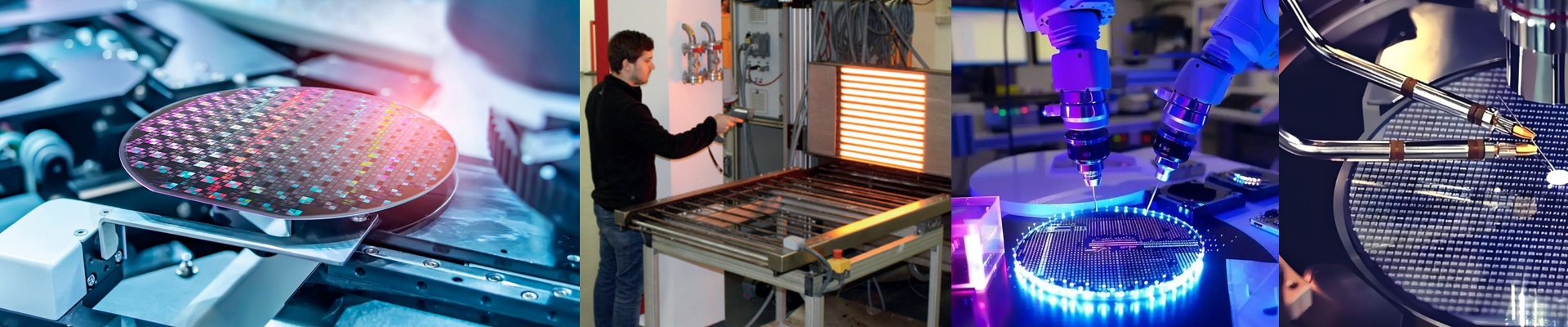
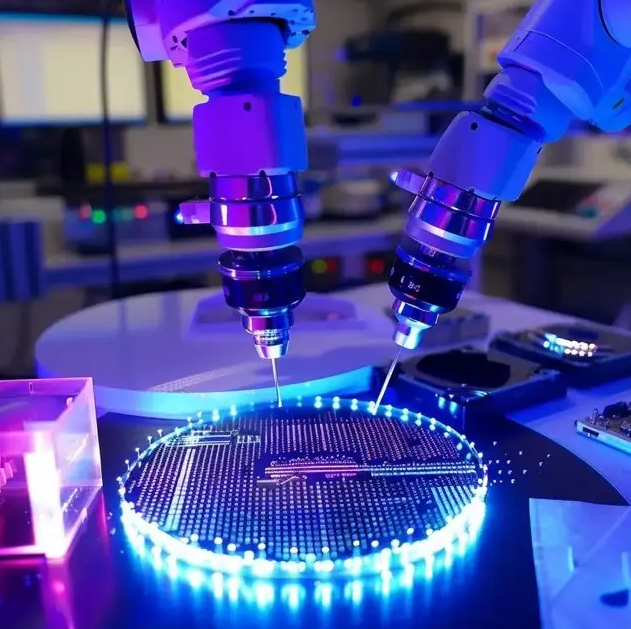
On the fab floor, the line doesn’t wait for anything. One thermal excursion during soft bake or hard bake, and your critical dimensions start to drift. Wafers get scrapped. Lithography stalls. You need a heating platform that’s built to run, not one that sits idle most of the day. What matters, technically We’re holding wafer-level uniformity at ±0.1°C across the substrate, so you keep your thermal budget and stay on target with CD control. Short-wave and medium-wave IR, paired with quartz and carbon-fiber-reinforced modules, hit temperature fast with minimal lag. That gives you stable bake profiles from 90°C to 150°C, cycle after cycle. The hardware runs clean—zero particle events—so it sits comfortably in cleanroom Class 1–100. In 7×24 operation, you’re looking at zero unplanned downtime, and the measured MTBF is over 30,000 hours. Repeatability stays locked in with closed-loop control, recipe storage, and traceable temperature logs. Why it holds up in lithography Photoresist processing tolerances are tight, and everyone knows it. The system keeps the setpoint within tight bands, so soft bake pulls solvents out uniformly, and hard bake sets the film without overbake or underbake. That translates into fewer reworks, higher yields, and predictable line-of-sight performance. Energy use is trimmed through pulse control and heat recovery, so you lower operating cost without slowing throughput. A few practical details Installation needs dedicated power conditioning. It keeps transients in check and protects temperature stability during grid events. Module swap-in is tool-free, but full integration with your existing track interfaces usually calls for a short qualification run—just to align recipes and make sure data capture is clean. Plan for a two-hour commissioning window, then a 24-hour burn-in to confirm zero drift.