Why Vacuum IR Heating is Winning in Semi-Fab
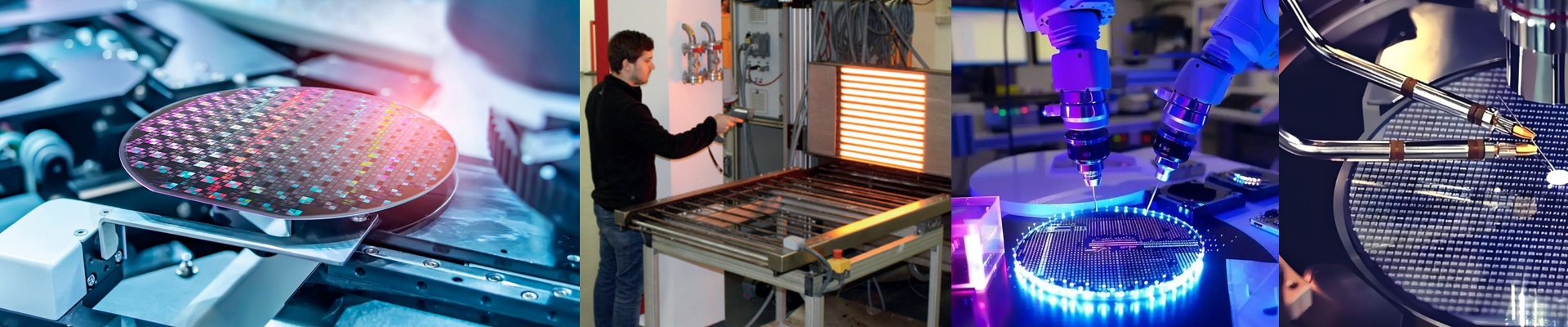
Let’s be honest: traditional convection ovens are starting to feel like relics. Most of us are moving away from them and shifting toward vacuum chamber infrared (IR) heaters. It’s not just about following “lead-free” or energy-saving rules—it’s because the old way of doing things is just inefficient. Think about it. With hot air, you’re spending a ton of energy heating up a massive volume of air just to get some heat to move into a wafer. It’s a waste. IR heating skips the middleman. It uses electromagnetic radiation to get the job done.
The Magic of Vacuum IR
When you pull the air out of the environment, things get interesting. No air means no oxidation. No air also means those annoying airborne contaminants can’t land on your substrate. The IR lamps shoot photons that dive straight into the curing layer. We can actually tune this to hit the specific absorption bands of the adhesive or photoresist. The heat goes exactly where it needs to go—into the product—instead of just warming up the chamber walls. **It’s fast. Really fast.**We’re talking about hitting target temperatures in seconds. That’s a huge win for your energy bill and your timeline.
Keeping it Green (Without the Headache)
Old-school curing usually involves chemical solvents or high heat that vents VOCs into the air. Nobody wants that. IR curing is a “dry” process. We use quartz lamps that don’t leak toxins or outgas. Plus, because we use PWM (Pulse Width Modulation) to control the IR, we don’t deal with that annoying temperature overshoot you get with resistive heaters. You aren’t burning through power just to keep a giant oven at a steady temperature. You only use the juice when the part is actually in the beam. Simple.
The Real-World Trade-offs
Now, it’s not all sunshine and rainbows. High-intensity IR lamps get incredibly hot at the mounting flanges. Since there’s no air in a vacuum to carry that heat away, you can’t rely on convection. You’ll need a dedicated water-cooling loop for the lamp housing. If your cooling isn’t dialed in for the actual wattage of the lamps, your filaments are going to burn out way too soon. It’s a balancing act. You want the radiation to be intense enough to work, but you have to keep an eye on the thermal load on your chamber seals. If those seals fail, you’ve got a problem.