Keeping Your Class 100 Cleanroom Actually Clean While Heating
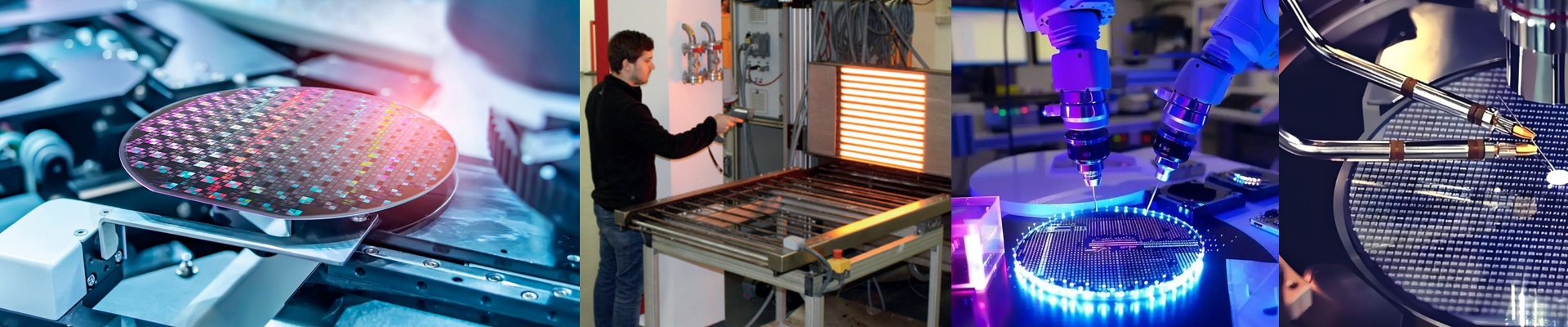
When you’re working in a Class 100 (ISO 5) environment, there is zero room for error. One tiny flake of dust or a whiff of outgassing can ruin an entire batch. Most traditional heaters just aren’t cut out for this—they tend to peel, flake, or leak those nasty volatile organic compounds (VOCs) right into your workspace. That’s why we stick with high-purity synthetic quartz infrared lamps.
Why the quartz matters
We use fused silica with an incredibly clean impurity profile. The big win here is that it doesn’t “smoke” or break down when it hits those peak temperatures. Think of the quartz tube as a tight, hermetic seal for the tungsten filament. Because everything is sealed in a high vacuum, the filament never touches the air. No oxygen means no oxidation, and no oxidation means no metallic particles drifting onto your production line. It’s clean. Simple as that.
Let’s talk specs
We focus heavily on heat density and spectral output. Shortwave IR is usually the way to go for cleanrooms. It punches through the material faster, which means your parts spend less time in the heating zone. Whether you’re running a 230V or 400V system, you’ve got to find a balance with your power density. High-wattage tubes get you up to temperature fast, but they’re hard on your reflectors. Here’s a tip: if your reflectors aren’t polished to a mirror finish, you’ll bleed about 30% of your energy as waste heat. That might not sound like much, but it can throw your entire HVAC balance off, and in a cleanroom, that’s a headache you don’t want.
The real-world trade-offs
To keep things stable, we use R7s or Sk15 connectors. They provide a snug, vibration-proof fit. This stops that annoying intermittent arcing that can create electrical noise and mess with your sensitive sensors. But keep in mind, high-purity quartz is brittle. It can handle a sudden jump in temperature just fine, but if you bump it or drop something on it? It’ll shatter. I always recommend building a rigid mounting frame so the lamps aren’t getting rattled during maintenance. Also, if you’re packing a lot of wattage into a tiny space, make sure you crank up the airflow. Otherwise, you’ll end up cooking the electronics sitting next to the heater.