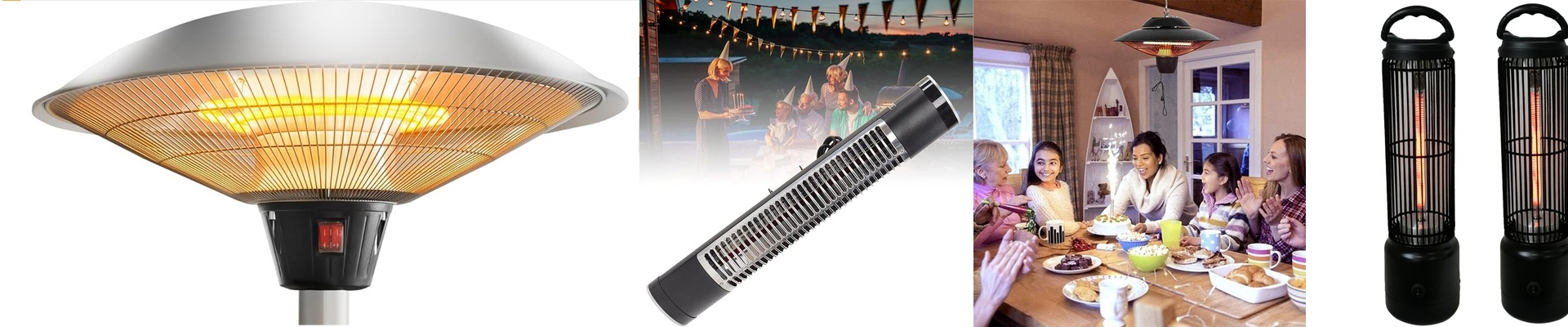
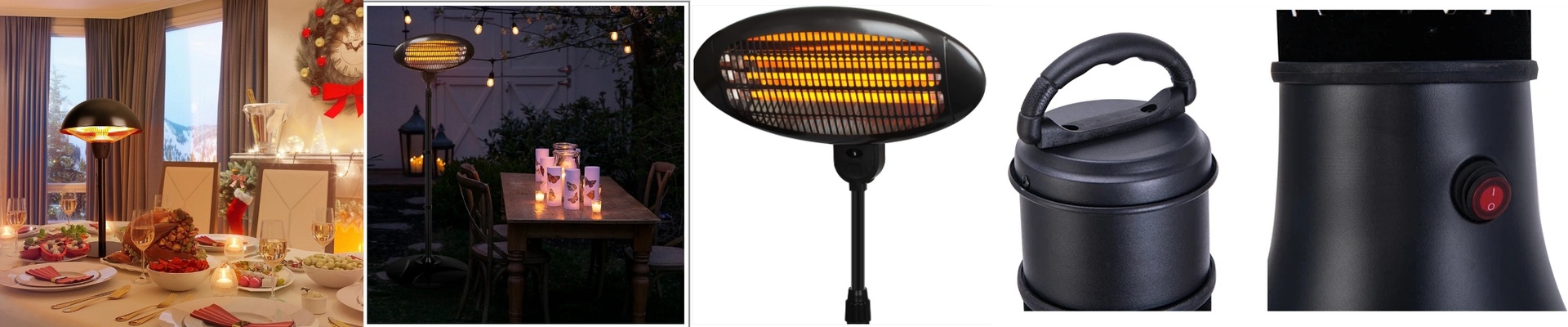
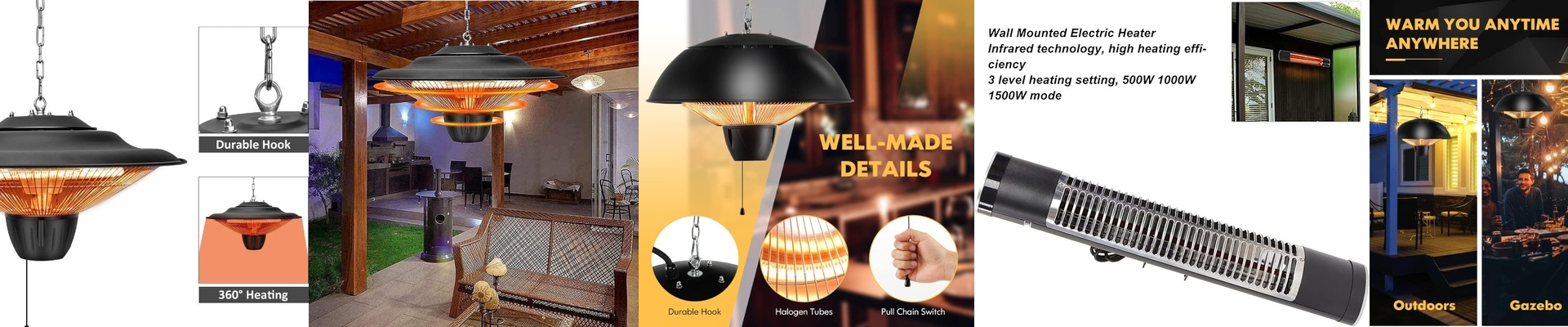


Evening drops, and the patio is set—until the air turns. With most heaters, you’re always playing catch-up: too hot, then too cold, and the whole time it’s humming and whooshing. The real challenge is making warmth feel natural, not like a constant battle.
What matters under the hood
We built this far infrared heater around a carbon-fiber element, so the heat is true radiant—warming people and surfaces directly instead of pushing around air. You feel it almost immediately, with very little draft. That’s exactly what you want for covered outdoor areas and indoor-outdoor rooms where air movement makes a difference. It runs off a standard electric supply, pulls power efficiently, and the integrated thermostat makes small, steady adjustments. The temperature stays even without the on-off jolts you get with many heaters. Safety is straightforward, too: tip-over protection shuts the unit down if it gets knocked, and the outer housing stays cool to the touch.
Why this approach fits
In practice, the heater reads conditions and responds quietly—so you don’t have to. The infrared warmth starts the moment you step in, and it stays comfortable because the heat is directed where you need it. Energy use stays tight, thanks to the thermostat’s fine control. The experience is calm: no loud fans, no blasts of hot air—just even, consistent heat. For homes and outdoor rooms, that means fewer tweaks, less fiddling, and more evenings that feel effortless.
What to keep in mind
For the best results, aim the heater so the infrared beam hits the seating area directly, and keep the path clear of big obstructions. This unit is designed for dry, covered spots. It can handle typical exposure, but direct rain or heavy spray can hurt performance, so keep it under shelter. Plug it into a stable, grounded outlet and follow the clearances to nearby furniture and finishes. This isn’t about chasing “perfect” heat. It’s about dependable warmth that shows up when you need it—and steps back when you don’t.