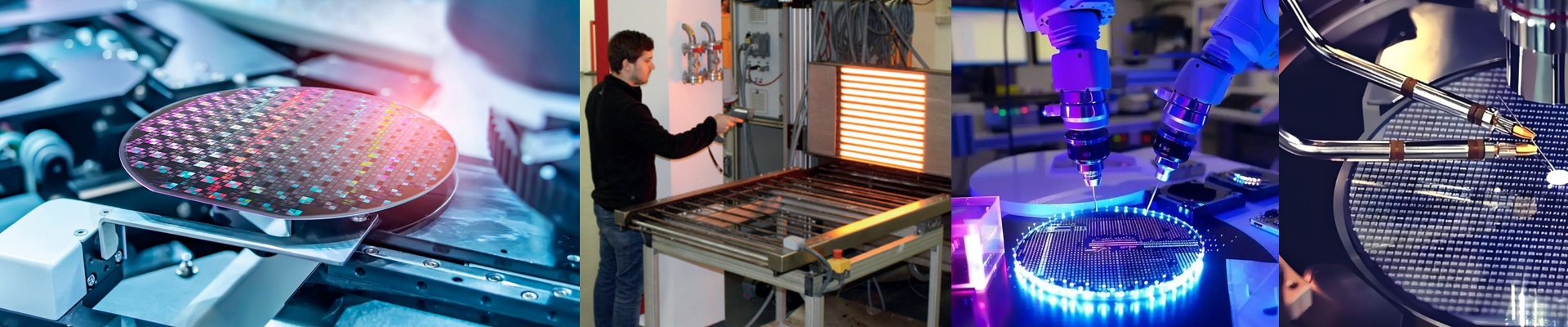

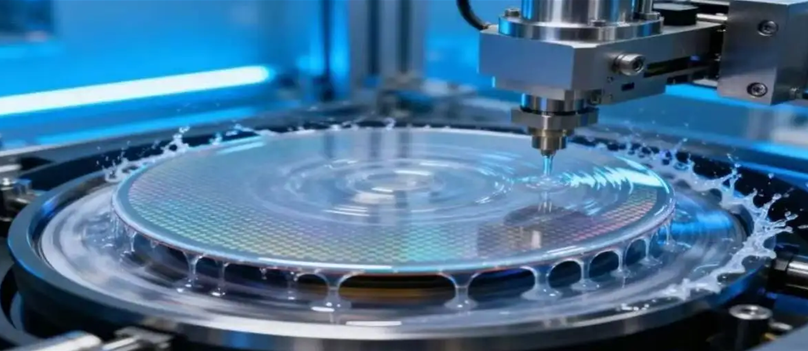
On the fab floor, a 300mm wafer carries thousands of die. A 2°C swing during the photoresist bake can take out an entire lot. We built our thermal systems to stop that from happening. What matters, technically, is control you can trust. Our NIR and medium-wave infrared modules hold wafer-level uniformity within ±0.1°C across the full process window, soft bake through hard bake. Quartz and carbon-fiber-reinforced heater elements ramp fast with minimal overshoot, so you protect the photoresist profile and keep linewidths on target. Every unit is rated for Class 1–100 cleanroom use, with zero particle generation and a sealed, low-outgassing build. The payoff is repeatability that keeps critical dimension variance below spec, and reliability that runs 24/7 without unplanned downtime. Why it works in real cells is simple: the thermal behavior has to match the recipe, not force you to bend the recipe to the tool. We integrate directly into existing coater/bake tracks and advanced packaging equipment, delivering precise temperature control on every wafer pass. Tighter thermal budgets. Fewer reworks. Yield that stays stable. Energy use drops because the heaters put heat where it’s needed, and cycle times tighten thanks to consistent ramp rates. For the semiconductor machinery parts trade, these modules drop in as an upgrade that extends equipment life without requalifying the whole line. Here are the things you need to plan for. Installation means matching voltage, connector type, and mechanical envelope to the host platform — we provide dimensional drawings and pinouts for common OEM footprints. Commissioning is short, but you will tune PID parameters to your specific process gas and wafer stack. In high-humidity environments, a small setpoint bias compensates for the ambient thermal load. Plan preventive maintenance every 5,000 hours to keep uniformity tight and particle counts at zero.