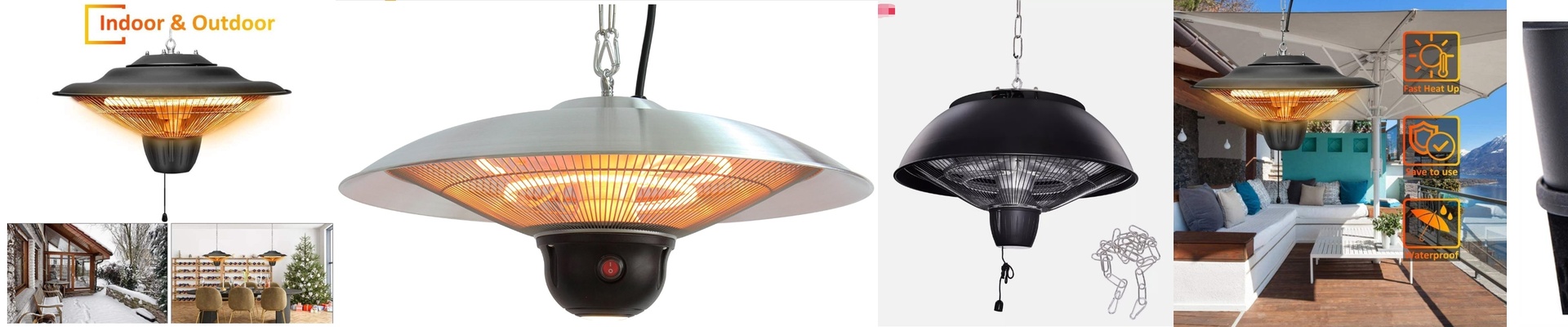

Why Most Outdoor Heaters Actually Fail
Here is the honest truth about IP65 outdoor heaters: most of them aren’t failing because the outer shell is weak. The real killer is the spot where the wires enter the unit. When you’re running a high-wattage infrared element, that heat doesn’t just blast forward to keep you warm. It crawls backward, right toward the electrical connections. In the cheap stuff, that heat basically bakes the wire insulation until it cracks. Then, it’s only a matter of time before something shorts out.
The slow burn of “generic” seals
A lot of brands use basic silicone or rubber gaskets. They look fine on day one. But after a few hundred hours of heating up and cooling down, those materials soften and shrink. Once that seal gaps, moisture creeps in. It’s a nasty mix of oxidation and carbonization that leads straight to a dead heater. We do things differently. We use a multi-stage setup: a high-temp ceramic sleeve to block the direct heat, and a specialized epoxy resin that stays rock-solid even at 200°C. We aren’t just plugging a hole; we’re building a wall against the heat.
It’s about how it’s made, not just the parts
You can buy the fanciest housing in the world, but if the lead-wire is just shoved through a rubber grommet, you’re basically staring at a ticking clock. The magic happens in the transition zone. We use precision tools for stripping and crimping to avoid those “cold joints” that create dangerous hotspots. Now, there is a trade-off. Because these seals are so heavy-duty, the wire exits are rigid. You can’t just bend them sharply or you’ll put too much stress on the seal. Just make sure your mounting bracket gives the wire a bit of room to breathe with a natural curve.
Dealing with the rain
Waterproofing is tricky. An IP65 rating means the unit can handle a jet of water, but the real enemy is something called capillary action. Basically, cheap seals let water “wick” along the wire, traveling inside the insulation like a straw. Our sealing process kills that path entirely. Even if the outer jacket takes a beating from a storm, the electrical path inside stays bone-dry and isolated.